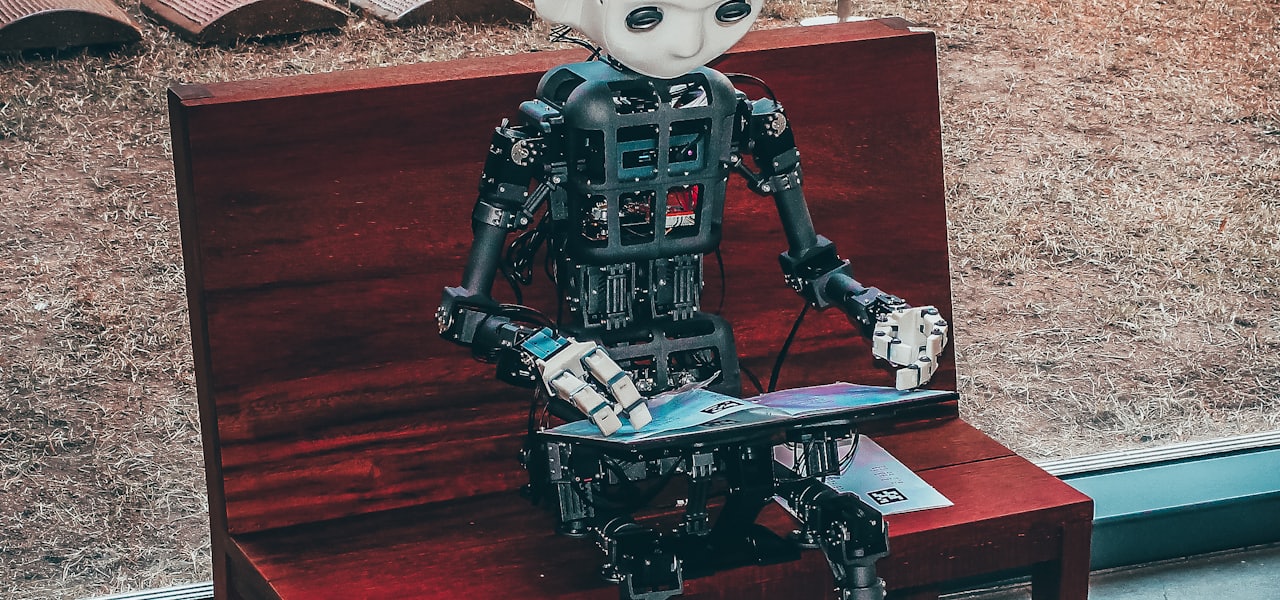
In the field of artificial intelligence (AI), tasks that are hypothesized to require artificial general intelligence to solve are informally known as AI-complete or AI-hard. Calling a problem AI-complete reflects the belief that it cannot be solved by a simple specific algorithm. Prior to 2013, problems supposed to be AI-complete included computer vision, natural language understanding, and dealing with unexpected circumstances while solving any real-world problem. AI-complete tasks were notably considered useful for distinguishing humans from automated agents, as CAPTCHAs aim to do. == History == The term was coined by Fanya Montalvo by analogy with NP-complete and NP-hard in complexity theory, which formally describes the most famous class of difficult problems. Early uses of the term are in Erik Mueller's 1987 PhD dissertation and in Eric Raymond's 1991 Jargon File. Expert systems, that were popular in the 1980s, were able to solve very simple and/or restricted versions of AI-complete problems, but never in their full generality. When AI researchers attempted to "scale up" their systems to handle more complicated, real-world situations, the programs tended to become excessively brittle without commonsense knowledge or a rudimentary understanding of the situation: they would fail as unexpected circumstances outside of its original problem context would begin to appear. When human beings are dealing with new situations in the world, they are helped by their awareness of the general context: they know what the things around them are, why they are there, what they are likely to do and so on. They can recognize unusual situations and adjust accordingly. Expert systems lacked this adaptability and were brittle when facing new situations. DeepMind published a work in May 2022 in which they trained a single model to do several things at the same time. The model, named Gato, can "play Atari, caption images, chat, stack blocks with a real robot arm and much more, deciding based on its context whether to output text, joint torques, button presses, or other tokens." Similarly, some tasks once considered to be AI-complete, like machine translation, are among the capabilities of large language models. == AI-complete problems == AI-complete problems have been hypothesized to include: AI peer review (composite natural language understanding, automated reasoning, automated theorem proving, formalized logic expert system) Bongard problems Computer vision (and subproblems such as object recognition) Natural language understanding (and subproblems such as text mining, machine translation, and word-sense disambiguation) Autonomous driving Dealing with unexpected circumstances while solving any real world problem, whether navigation, planning, or even the kind of reasoning done by expert systems. == Formalization == Computational complexity theory deals with the relative computational difficulty of computable functions. By definition, it does not cover problems whose solution is unknown or has not been characterized formally. Since many AI problems have no formalization yet, conventional complexity theory does not enable a formal definition of AI-completeness. == Research == Roman Yampolskiy suggests that a problem C {\displaystyle C} is AI-Complete if it has two properties: It is in the set of AI problems (Human Oracle-solvable). Any AI problem can be converted into C {\displaystyle C} by some polynomial time algorithm. On the other hand, a problem H {\displaystyle H} is AI-Hard if and only if there is an AI-Complete problem C {\displaystyle C} that is polynomial time Turing-reducible to H {\displaystyle H} . This also gives as a consequence the existence of AI-Easy problems, that are solvable in polynomial time by a deterministic Turing machine with an oracle for some problem. Yampolskiy has also hypothesized that the Turing Test is a defining feature of AI-completeness. Groppe and Jain classify problems which require artificial general intelligence to reach human-level machine performance as AI-complete, while only restricted versions of AI-complete problems can be solved by the current AI systems. For Šekrst, getting a polynomial solution to AI-complete problems would not necessarily be equal to solving the issue of artificial general intelligence, while emphasizing the lack of computational complexity research being the limiting factor towards achieving artificial general intelligence. For Kwee-Bintoro and Velez, solving AI-complete problems would have strong repercussions on society.
Lesk algorithm
The Lesk algorithm is a classical algorithm for word sense disambiguation introduced by Michael E. Lesk in 1986. It operates on the premise that words within a given context are likely to share a common meaning. This algorithm compares the dictionary definitions of an ambiguous word with the words in its surrounding context to determine the most appropriate sense. Variations, such as the Simplified Lesk algorithm, have demonstrated improved precision and efficiency. However, the Lesk algorithm has faced criticism for its sensitivity to definition wording and its reliance on brief glosses. Researchers have sought to enhance its accuracy by incorporating additional resources like thesauruses and syntactic models. == Overview == The Lesk algorithm is based on the assumption that words in a given "neighborhood" (section of text) will tend to share a common topic. A simplified version of the Lesk algorithm is to compare the dictionary definition of an ambiguous word with the terms contained in its neighborhood. Versions have been adapted to use WordNet. An implementation might look like this: for every sense of the word being disambiguated one should count the number of words that are in both the neighborhood of that word and in the dictionary definition of that sense the sense that is to be chosen is the sense that has the largest number of this count. A frequently used example illustrating this algorithm is for the context "pine cone". The following dictionary definitions are used: PINE 1. kinds of evergreen tree with needle-shaped leaves 2. waste away through sorrow or illness CONE 1. solid body which narrows to a point 2. something of this shape whether solid or hollow 3. fruit of certain evergreen trees As can be seen, the best intersection is Pine #1 ⋂ Cone #3 = 2. == Simplified Lesk algorithm == In Simplified Lesk algorithm, the correct meaning of each word in a given context is determined individually by locating the sense that overlaps the most between its dictionary definition and the given context. Rather than simultaneously determining the meanings of all words in a given context, this approach tackles each word individually, independent of the meaning of the other words occurring in the same context. "A comparative evaluation performed by Vasilescu et al. (2004) has shown that the simplified Lesk algorithm can significantly outperform the original definition of the algorithm, both in terms of precision and efficiency. By evaluating the disambiguation algorithms on the Senseval-2 English all words data, they measure a 58% precision using the simplified Lesk algorithm compared to the only 42% under the original algorithm. Note: Vasilescu et al. implementation considers a back-off strategy for words not covered by the algorithm, consisting of the most frequent sense defined in WordNet. This means that words for which all their possible meanings lead to zero overlap with current context or with other word definitions are by default assigned sense number one in WordNet." Simplified LESK Algorithm with smart default word sense (Vasilescu et al., 2004) The COMPUTEOVERLAP function returns the number of words in common between two sets, ignoring function words or other words on a stop list. The original Lesk algorithm defines the context in a more complex way. == Criticisms == Unfortunately, Lesk’s approach is very sensitive to the exact wording of definitions, so the absence of a certain word can radically change the results. Further, the algorithm determines overlaps only among the glosses of the senses being considered. This is a significant limitation in that dictionary glosses tend to be fairly short and do not provide sufficient vocabulary to relate fine-grained sense distinctions. A lot of work has appeared offering different modifications of this algorithm. These works use other resources for analysis (thesauruses, synonyms dictionaries or morphological and syntactic models): for instance, it may use such information as synonyms, different derivatives, or words from definitions of words from definitions. == Lesk variants == Original Lesk (Lesk, 1986) Adapted/Extended Lesk (Banerjee and Pederson, 2002/2003): In the adaptive lesk algorithm, a word vector is created corresponds to every content word in the wordnet gloss. Concatenating glosses of related concepts in WordNet can be used to augment this vector. The vector contains the co-occurrence counts of words co-occurring with w in a large corpus. Adding all the word vectors for all the content words in its gloss creates the Gloss vector g for a concept. Relatedness is determined by comparing the gloss vector using the Cosine similarity measure. There are a lot of studies concerning Lesk and its extensions: Wilks and Stevenson, 1998, 1999; Mahesh et al., 1997; Cowie et al., 1992; Yarowsky, 1992; Pook and Catlett, 1988; Kilgarriff and Rosensweig, 2000; Kwong, 2001; Nastase and Szpakowicz, 2001; Gelbukh and Sidorov, 2004.
Template matching
Template matching is a technique in digital image processing for finding small parts of an image which match a template image. It can be used for quality control in manufacturing, navigation of mobile robots, or edge detection in images. The main challenges in a template matching task are detection of occlusion, when a sought-after object is partly hidden in an image; detection of non-rigid transformations, when an object is distorted or imaged from different angles; sensitivity to illumination and background changes; background clutter; and scale changes. == Feature-based approach == The feature-based approach to template matching relies on the extraction of image features, such as shapes, textures, and colors, that match the target image or frame. This approach is usually achieved using neural networks and deep-learning classifiers such as VGG, AlexNet, and ResNet.Convolutional neural networks (CNNs), which many modern classifiers are based on, process an image by passing it through different hidden layers, producing a vector at each layer with classification information about the image. These vectors are extracted from the network and used as the features of the image. Feature extraction using deep neural networks, like CNNs, has proven extremely effective has become the standard in state-of-the-art template matching algorithms. This feature-based approach is often more robust than the template-based approach described below. As such, it has become the state-of-the-art method for template matching, as it can match templates with non-rigid and out-of-plane transformations, as well as high background clutter and illumination changes. == Template-based approach == For templates without strong features, or for when the bulk of a template image constitutes the matching image as a whole, a template-based approach may be effective. Since template-based matching may require sampling of a large number of data points, it is often desirable to reduce the number of sampling points by reducing the resolution of search and template images by the same factor before performing the operation on the resultant downsized images. This pre-processing method creates a multi-scale, or pyramid, representation of images, providing a reduced search window of data points within a search image so that the template does not have to be compared with every viable data point. Pyramid representations are a method of dimensionality reduction, a common aim of machine learning on data sets that suffer the curse of dimensionality. == Common challenges == In instances where the template may not provide a direct match, it may be useful to implement eigenspaces to create templates that detail the matching object under a number of different conditions, such as varying perspectives, illuminations, color contrasts, or object poses. For example, if an algorithm is looking for a face, its template eigenspaces may consist of images (i.e., templates) of faces in different positions to the camera, in different lighting conditions, or with different expressions (i.e., poses). It is also possible for a matching image to be obscured or occluded by an object. In these cases, it is unreasonable to provide a multitude of templates to cover each possible occlusion. For example, the search object may be a playing card, and in some of the search images, the card is obscured by the fingers of someone holding the card, or by another card on top of it, or by some other object in front of the camera. In cases where the object is malleable or poseable, motion becomes an additional problem, and problems involving both motion and occlusion become ambiguous. In these cases, one possible solution is to divide the template image into multiple sub-images and perform matching on each subdivision. == Deformable templates in computational anatomy == Template matching is a central tool in computational anatomy (CA). In this field, a deformable template model is used to model the space of human anatomies and their orbits under the group of diffeomorphisms, functions which smoothly deform an object. Template matching arises as an approach to finding the unknown diffeomorphism that acts on a template image to match the target image. Template matching algorithms in CA have come to be called large deformation diffeomorphic metric mappings (LDDMMs). Currently, there are LDDMM template matching algorithms for matching anatomical landmark points, curves, surfaces, volumes. == Template-based matching explained using cross correlation or sum of absolute differences == A basic method of template matching sometimes called "Linear Spatial Filtering" uses an image patch (i.e., the "template image" or "filter mask") tailored to a specific feature of search images to detect. This technique can be easily performed on grey images or edge images, where the additional variable of color is either not present or not relevant. Cross correlation techniques compare the similarities of the search and template images. Their outputs should be highest at places where the image structure matches the template structure, i.e., where large search image values get multiplied by large template image values. This method is normally implemented by first picking out a part of a search image to use as a template. Let S ( x , y ) {\displaystyle S(x,y)} represent the value of a search image pixel, where ( x , y ) {\displaystyle (x,y)} represents the coordinates of the pixel in the search image. For simplicity, assume pixel values are scalar, as in a greyscale image. Similarly, let T ( x t , y t ) {\textstyle T(x_{t},y_{t})} represent the value of a template pixel, where ( x t , y t ) {\textstyle (x_{t},y_{t})} represents the coordinates of the pixel in the template image. To apply the filter, simply move the center (or origin) of the template image over each point in the search image and calculate the sum of products, similar to a dot product, between the pixel values in the search and template images over the whole area spanned by the template. More formally, if ( 0 , 0 ) {\displaystyle (0,0)} is the center (or origin) of the template image, then the cross correlation T ⋆ S {\displaystyle T\star S} at each point ( x , y ) {\displaystyle (x,y)} in the search image can be computed as: ( T ⋆ S ) ( x , y ) = ∑ ( x t , y t ) ∈ T T ( x t , y t ) ⋅ S ( x t + x , y t + y ) {\displaystyle (T\star S)(x,y)=\sum _{(x_{t},y_{t})\in T}T(x_{t},y_{t})\cdot S(x_{t}+x,y_{t}+y)} For convenience, T {\displaystyle T} denotes both the pixel values of the template image as well as its domain, the bounds of the template. Note that all possible positions of the template with respect to the search image are considered. Since cross correlation values are greatest when the values of the search and template pixels align, the best matching position ( x m , y m ) {\displaystyle (x_{m},y_{m})} corresponds to the maximum value of T ⋆ S {\displaystyle T\star S} over S {\displaystyle S} . Another way to handle translation problems on images using template matching is to compare the intensities of the pixels, using the sum of absolute differences (SAD) measure. To formulate this, let I S ( x s , y s ) {\displaystyle I_{S}(x_{s},y_{s})} and I T ( x t , y t ) {\displaystyle I_{T}(x_{t},y_{t})} denote the light intensity of pixels in the search and template images with coordinates ( x s , y s ) {\displaystyle (x_{s},y_{s})} and ( x t , y t ) {\displaystyle (x_{t},y_{t})} , respectively. Then by moving the center (or origin) of the template to a point ( x , y ) {\displaystyle (x,y)} in the search image, as before, the sum of absolute differences between the template and search pixel intensities at that point is: S A D ( x , y ) = ∑ ( x t , y t ) ∈ T | I T ( x t , y t ) − I S ( x t + x , y t + y ) | {\displaystyle SAD(x,y)=\sum _{(x_{t},y_{t})\in T}\left\vert I_{T}(x_{t},y_{t})-I_{S}(x_{t}+x,y_{t}+y)\right\vert } With this measure, the lowest SAD gives the best position for the template, rather than the greatest as with cross correlation. SAD tends to be relatively simple to implement and understand, but it also tends to be relatively slow to execute. A simple C++ implementation of SAD template matching is given below. == Implementation == In this simple implementation, it is assumed that the above described method is applied on grey images: This is why Grey is used as pixel intensity. The final position in this implementation gives the top left location for where the template image best matches the search image. One way to perform template matching on color images is to decompose the pixels into their color components and measure the quality of match between the color template and search image using the sum of the SAD computed for each color separately. == Speeding up the process == In the past, this type of spatial filtering was normally only used in dedicated hardware solutions because of the computational complexity of the operation, however we can lessen this complexity b
Necrobotics
Necrobotics is the practice of using biotic materials (or dead organisms) as robotic components. Necrobotics can serve as an alternative to mechanical components that are difficult to manufacture by using biological components designed by natural selection in order to exploit the highly developed selective design implemented in biological lifeforms via the process of evolution. In July 2022, researchers in the Preston Innovation Lab at Rice University in Houston, Texas published a paper in Advanced Science introducing the concept and demonstrating its capability by repurposing dead spiders as robotic grippers and applying pressurized air to activate their gripping arms. In April 2025 researchers at Shinshu University created a “bio-hybrid drone” using silk-worm moth antennae to detect the source of a smell. In November 2025 researchers at McGill University demonstrated the use of a mosquito proboscis as a fine nozzle in experimental 3D printing. Necrobotics utilizes the spider's organic hydraulic system and their compact legs to create an efficient and simple gripper system. The necrobotic spider gripper is capable of lifting small and light objects, thereby serving as an alternative to complex and costly small mechanical grippers. == Background == The main appeal of the spider's body in necrobotics is its compact leg mechanism and use of hydraulic pressure. The spider's anatomy utilizes a simple hydraulic (fluid) pressure system. Spider legs have flexor muscles that naturally constrict their legs when relaxed. A force is required to straighten and extend their legs, which spiders accomplish by pumping hemolymph fluid (blood) through their joints as a means of hydraulic pressure. It takes no external power to curl their legs due to their flexor muscles' natural curled state. In July 2022, researchers in the Preston Innovation Lab at Rice University published a paper detailing their experiments with the gripper. Although dead spiders no longer produce hemolymph, Te Faye Yap (lead author and mechanical engineering graduate) found that pumping air through a needle into the spider's cephalothorax (main body) accomplishes the same results as hemolymph. The original hydraulic (fluid) system is essentially converted into a pneumatic (air) system. == Fabrication == Obtain a spider Euthanize the spider using a cold temperature of around -4°C for 5-7 days Insert a 25 gauge hypodermic needle into the spider's cephalothorax (main body) Apply glue around the needle to form a seal and allow it to dry Connect a syringe or pump to the needle Extend the spider's legs by pumping air in == Testing and Data == === Internal Force Versus Gripping Force === The typical pressure in a resting spider's legs ranges from 4 kPa to 6.1 kPa. Researchers extended the legs by increasing the spider's internal pressure to 5.5 kPa. Pumping air into the body increases the internal pressure, causing the legs to expand. Pumping air out of the body decreases internal pressure, causing the legs to contract due to their flexor leg muscles. When the internal pressure decreases to 0 kPa, the gripper would be fully closed, allowing for the gripper to grasp objects. This action demonstrates that as internal pressure decreases, the gripping force increases. Inversely, when internal pressure increases, the gripping force decreases. By gripping individual weighted acetate beads, it is found that the necrobotic gripper achieves a maximum gripping force of 0.35 milinewtons. === Spider Weight Versus Gripping Force === To estimate the gripping forces of smaller and larger spiders, researchers created a plot to predict the gripping force relative to the size of the spider. The wolf spider's body weight is relatively equal to the gripping force of its legs. The mass of the gripper is 33.5 mg and can lift 1.3 times its body weight (43.6 mg or 0.35 mN). However, with larger spiders, the gripping force relative to body weight decreases. For example, a 200-gram goliath birdeater is predicted to lift 10% of its weight (20 grams or 196 mN). Though there is an inverse relationship between spider mass and gripping force, larger spiders exert greater gripping forces than smaller spiders. === Gripper Lifespan === The necrobotic gripper's functionality is entirely reliant on the structural integrity of the spider. If the spider were to break down easily and frequently, the gripper would not be practical. Using cyclic testing, a series of repeated actions, it is found that the necrobotic gripper can actuate 700 to 1000 times. After 1000 cycles, cracks begin forming on the membrane of the leg joints due to dehydration. Weakened and decomposing joints lead to frequent breakage and replacement, thereby serving as an obstacle in applying necrobotics to real-world scenarios. One theorized fix to this issue is applying beeswax or a lubricant to the joints. Researchers found that over 10 days, the mass of an uncoated spider decreased 17 times more than the mass of a spider coated with beeswax. Lubricating joints combats dehydration and slows the loss of organic material. == Constraints == With the usage of organic material, there is a higher chance of the component decomposing and breaking down as opposed to traditional mechanical systems. There may be additional work and management required to replace these grippers if they fail. Additionally, organic inconsistencies with the spiders will yield inaccurate results. Not all wolf spiders develop the same, so gripping force and leg contraction can vary between grippers. There are moral implications behind euthanizing spiders for robotics. The ethical boundaries that necrobotics push in the pursuit of biohybrid systems raise concerns, as opponents say it may lead to the hybridization of mammals and is intrusive to nature. Proponents respond that repurposing dead animals has been human practice for millennia and that necrobotics should be pursued to advance science.
Robotics
Robotics is the interdisciplinary study and practice of the design, construction, operation, and use of robots. A roboticist is someone who specializes in robotics. Robotics usually combines four aspects of design work: a power source (e.g. a battery), mechanical construction, a control system (electrical circuits), and software (run by remote control or artificial intelligence). The goal of most robotics is to design machines that can assist humans in various fields, such as agriculture, construction, domestic work, food processing, inventory management, manufacturing, medicine, military, mining, space exploration, and transportation. Robots impact humans by displacing workers. Some expect this to occur at an increasing rate, leading to proposed solutions such as basic income. Robotics is itself a lucrative business that creates careers, especially for postgraduates. Roboticists often aim to create machines that seem to interface naturally with humans. The field is under active research and development, with areas of interest including robot kinematics and quantum robotics. == Design == Robotics usually combines four aspects of design work to create a robot: Power source: Potential energy sources include wired electricity, a battery, and/or petrol. Mechanical construction: A physical form or combination of forms is designed to functionally achieve tasks within a given range of environments. This can include locomotive elements such as wheels and caterpillar tracks, as well as hydraulic limbs and manipulators (e.g. hands). Control system: Electrical circuits (utilizing components such as diodes and transistors) are used to run software, govern motor movement, and read sensors. Software: A program is how a robot decides when or how to do something. Robotic programs can be run by remote control, artificial intelligence (AI), or a hybrid of the two. AI programming is an important part of robotic navigation and human–robot interaction. === Power source === Many different types of batteries can be used as a power source. Most are lead–acid batteries, which are safe and have relatively long shelf lives but are rather heavy compared to silver–cadmium batteries, which are much smaller in volume and much more expensive. Designing a battery-powered robot needs to take into account factors such as safety, cycle lifetime, and weight. Generators, often some type of internal combustion engine, can also be used, but are often mechanically complex and inefficient. Additionally, a tether could connect the robot to a power supply, saving weight and space, but requiring a cumbersome cable. Potential power sources include: Flywheel energy storage Hydraulics Nuclear Organic garbage (through anaerobic digestion) Pneumatics (compressed gases) Solar power === Mechanical construction === Actuators are the "muscles" of a robot, the parts which convert stored energy into movement. The most popular actuators are electric motors that rotate a wheel or gear and linear actuators that control factory robots. Most robots use electric motors—often brushed and brushless DC motors in portable robots or AC motors in industrial robots and computer numerical control machines—especially in systems with lighter loads and where the predominant form of motion is rotational. Meanwhile, linear actuators move in and out and often have quicker direction changes, particularly when large forces are needed, such as with industrial robotics. They are typically powered by oil or compressed air, but can also be powered by electricity, usually via a motor and a leadscrew. The mechanical rack and pinion is common. Recent alternatives to DC motors are piezoelectric motors, including ultrasonic motors, in which tiny piezoceramic elements vibrate many thousands of times per second, causing linear or rotary motion. One type uses the vibration of the piezo elements to step the motor in a circle or a straight line; another type uses the piezo elements to vibrate a nut or drive a screw. The advantages of these motors are nanometer resolution, speed, and force for their size. Series elastic actuation (SEA) relies on introducing intentional elasticity between the motor actuator and the load for robust force control. Due to the resultant lower reflected inertia, series elastic actuation improves safety during robot interactions or collisions. Further, it provides energy efficiency and shock absorption (mechanical filtering) while reducing excessive wear on the transmission and other components. This approach has successfully been employed in various robots, particularly advanced manufacturing robots and walking humanoid robots. The controller design of a series elastic actuator is most often performed within the passivity framework as it ensures the safety of interaction with unstructured environments. However, this framework suffers from stringent limitations imposed on the controller, which may impact performance. Pneumatic artificial muscles, also known as air muscles, are special tubes that expand (typically up to 42%) when air is forced inside them; they are used in some robot applications. Muscle wire, also known as shape memory alloy, is a material that contracts (under 5%) when electricity is applied; they have been used for some small robots. Electroactive polymers are a plastic material that can contract substantially (up to 380% activation strain) from electricity and have been used in the facial muscles and arms of humanoid robots, as well as to enable new robots to float, fly, swim or walk. Additionally, elastic carbon nanotubes are a promising experimental artificial muscle technology. The absence of defects in carbon nanotubes enables these filaments to deform elastically by several percent, with energy storage levels of perhaps 10 J/cm3 for metal nanotubes. Human biceps could be replaced with wire of this material measuring 8 millimetres (3⁄8 in) in diameter, feasibly allowing future robots to outperform humans. ==== Locomotion ==== Robots with only one or two wheel(s) can have advantages such as greater efficiency, reduced parts, and navigation through confined areas. A one-wheeled robot balances on a round ball; Carnegie Mellon University's Ballbot is the approximate height and width of a person. Several attempts have also been made to build spherical robots (also known as orb bots or ball bots), which move by spinning a weight inside the ball or rotating outer shells. Two-wheeled balancing robots generally use a gyroscope to detect how much a robot is falling and drive the wheels proportionally up to hundreds of times per second to counterbalance the fall, based on inverted pendulum dynamics. NASA's Robonaut has been mounted to a Segway for a similar effect. Most mobile robots have four wheels or continuous tracks. Six wheels can give better traction in outdoor terrain, while tracks provide even more grip. Tracked wheels are common for outdoor off-road robots, but are difficult to use indoors. A small number of skating robots have been developed, one of which is a multimodal walking and skating device with four legs and unpowered wheels. Several robots have been made that can walk on two legs, but not yet as reliably as a human. Many other robots have been built that walk on more than two legs, being significantly easier. Walking robots could be used for uneven terrains, providing a high degree of mobility and efficiency, but two-legged robots can currently only handle flat floors or perhaps stairs. Some approaches have included: The zero moment point (ZMP) is the algorithm used by robots such as Honda's ASIMO. The robot's onboard computer tries to keep the total inertial forces (the combination of Earth's gravity and the acceleration and deceleration of walking) exactly opposed by the floor reaction force (the force of the floor pushing back on the robot's foot). In this way, the two forces cancel out, leaving no moment (force causing the robot to rotate and fall over). Human observers note that this is not exactly how a human walks, with some describing ASIMO's walk as looking like it needs use the bathroom. ASIMO's walking algorithm utilizes some dynamic balancing, but requires a flat surface. Several robots, built in the 1980s by Marc Raibert at the MIT Leg Laboratory, successfully demonstrated very dynamic walking. Initially, a robot with only one leg, and a very small foot could stay upright simply by hopping. The movement is the same as that of a person on a pogo stick. As the robot falls to one side, it would jump slightly in that direction to catch itself. Soon, the algorithm was generalized to two and four legs. A bipedal robot was demonstrated running and even performing somersaults. A quadruped was also demonstrated which could trot, run, pace, and bound. A more advanced approach is a dynamic balancing algorithm, which constantly monitors the robot's motion and places the feet to maintain stability. This technique has been demonstrated by Anybots' Dexter robot (
Supersampling
Supersampling or supersampling anti-aliasing (SSAA) is a spatial anti-aliasing method, i.e. a method used to remove aliasing (jagged and pixelated edges, colloquially known as "jaggies") from images rendered in computer games or other computer programs that generate imagery. Aliasing occurs because unlike real-world objects, which have continuous smooth curves and lines, a computer screen shows the viewer a large number of small squares. These pixels all have the same size, and each one has a single color. A line can only be shown as a collection of pixels, and therefore appears jagged unless it is perfectly horizontal or vertical. The aim of supersampling is to reduce this effect. Color samples are taken at several instances inside the pixel (not just at the center as normal)—hence the term "supersampling"—and an average color value is calculated. This can for example be achieved by rendering the image at a much higher resolution than the one being displayed, then shrinking it to the desired size, using the extra pixels for calculation, with the result being a downsampled image with smoother transitions from one line of pixels to another along the edges of objects, but each pixel could also be supersampled using other strategies (see the Supersampling patterns section). The number of samples determines the quality of the output. == Motivation == Aliasing is manifested in the case of 2D images as moiré pattern and pixelated edges, colloquially known as "jaggies". Common signal processing and image processing knowledge suggests that to achieve perfect elimination of aliasing, proper spatial sampling at the Nyquist rate (or higher) after applying a 2D Anti-aliasing filter is required. As this approach would require a forward and inverse fourier transformation, computationally less demanding approximations like supersampling were developed to avoid domain switches by staying in the spatial domain ("image domain"). == Method == === Computational cost and adaptive supersampling === Supersampling is computationally expensive because it requires much greater video card memory and memory bandwidth, since the amount of buffer used is several times larger. A way around this problem is to use a technique known as adaptive supersampling, where only pixels at the edges of objects are supersampled. Initially only a few samples are taken within each pixel. If these values are very similar, only these samples are used to determine the color. If not, more are used. The result of this method is that a higher number of samples are calculated only where necessary, thus improving performance. === Supersampling patterns === When taking samples within a pixel, the sample positions have to be determined in some way. Although the number of ways in which this can be done is infinite, there are a few ways which are commonly used. ==== Grid ==== The simplest algorithm. The pixel is split into several sub-pixels, and a sample is taken from the center of each. It is fast and easy to implement. Although, due to the regular nature of sampling, aliasing can still occur if a low number of sub-pixels is used. ==== Random ==== Also known as stochastic sampling, it avoids the regularity of grid supersampling. However, due to the irregularity of the pattern, samples end up being unnecessary in some areas of the pixel and lacking in others. ==== Poisson disk ==== The Poisson disk sampling algorithm places the samples randomly, but then checks that any two are not too close. The end result is an even but random distribution of samples. The naive "dart throwing" algorithm is extremely slow for large data sets, which once limited its applications for real-time rendering. However, many fast algorithms now exist to generate Poisson disk noise, even those with variable density. The Delone set provides a mathematical description of such sampling. ==== Jittered ==== A modification of the grid algorithm to approximate the Poisson disk. A pixel is split into several sub-pixels, but a sample is not taken from the center of each, but from a random point within the sub-pixel. Congregation can still occur, but to a lesser degree. ==== Rotated grid ==== A 2×2 grid layout is used but the sample pattern is rotated to avoid samples aligning on the horizontal or vertical axis, greatly improving antialiasing quality for the most commonly encountered cases. For an optimal pattern, the rotation angle is arctan (1/2) (about 26.6°) and the square is stretched by a factor of √5/2, making it also a 4-queens solution.
PhotoLine
PhotoLine is a general purpose bitmap and vector graphics editor developed and published by Computerinsel GmbH for Windows, macOS, and Linux/Wine. It was originally created in 1995 by Gerhard Huber and Martin Huber. The program combines bitmap and vector graphics editing in one seamless working application unlike most graphics software which tend to focus on either bitmap or vector editing and output. PhotoLine is considered as a market competitor to Adobe Photoshop. == Features == PhotoLine edits and composes multi-layer raster and vector images with deep support for masking and alpha compositing and with full color management. Editing and color management in PhotoLine is mostly non-destructive. Image data in layers is preserved without loss of information regardless of the document's image mode or layer transformation. color depth, image resolution, color model, and ICC profile are preserved for each individual layer or group of layers. Layers can be cloned and reused anywhere in the layer stack, including repurposed as layer masks. Layer blending and compositing in PhotoLine supports common blend modes, and features a layer blend range of -200 to +200 percent. It is also possible to control which channels are blended for each layer, adjustment layer, and layer mask or group of layers. Filters, adjustment layers, and brushes have access to Lab and HIS color modes (HIS is a variant of HSL), separately of the color model of the underlying image layer. In Addition to raster and vector editing, PhotoLine can be used for small desktop publishing projects. Multi-page documents with page spreads and text flow between text frames and pages are supported. Character and paragraph styles can be defined. Spot colors, bleed settings, a baseline grid, a table of contents generator, and PDF/X support help with these projects. PhotoLine is however much more limited when compared to dedicated publishing software such as Adobe InDesign or QuarkXPress. PhotoLine incorporates the Open-source software library LibRaw to read raw images from digital cameras for import. Developing these files is non-destructive with a choice of embedding the RAW image data either in the PhotoLine document or link to the external RAW image file. PhotoLine can open raw files as linear unmodified and non color managed source images. Photoshop PSD files can be imported and exported. Core functionality of PhotoLine can be extended through standard Photoshop filter plugins, the G'MIC digital image processing framework, and PSP tubes. External programs can be linked for a seamless round-trip workflow and files can be sent directly for processing in third-party design applications. Custom functionality is further supported through scripting and macro recording. == Early history == Developed by two brothers, Gerhard Huber and Martin Huber, PhotoLine was first released in January 1996 on the Atari ST line of personal computers from Atari Corporation. Previously, Gerhard and Martin had worked on making graphics cards for Atari computers and writing drivers for image scanners. Atari's market share was declining, and the brothers considered developing a video game to expand the business. This led them to search for image editing software that would run on Atari computers and fit their game project. Only an image editor called tms Cranach came close to what Gerhard and Martin had in mind. tms Cranach was a Raster graphics editor running on Atari's MegaST/STe, TT030, and Falcon030 systems. However, Cranach turned out to be expensive software and complicated to use. The brothers contacted tms (Cranach's developers) and this resulted in an offer from tms to purchase Cranach and its source code, as tms intended to exit the Atari software market. After the purchase of Cranach and its source code Gerhard and Martin initially continued to sell Cranach, but sales were low. In 1995 the two decided to start developing a new graphics editor called "PhotoLine". PhotoLine was developed from scratch and written in C++. It nevertheless contained a lot of know-how from Cranach (which was written in C). PhotoLine first release was launched one year later in 1996. With the growing popularity of Microsoft Windows, the release of Windows 95, and the limiting graphics hardware on the Atari platforms, the developers switched development platforms and continued development of PhotoLine for Windows only. The first Windows version (PhotoLine 2.2) was released in the middle of 1997. Shortly after, the Atari version was discontinued and saw its final release as PhotoLine 2.30. The Huber brothers released this final Atari version into the public domain in 2012. The first Classic Mac OS version of PhotoLine 6 appeared in 1999 after many ex-Atari users who had switched to Mac OS pressured the PhotoLine developers to release an Apple port. == Linux Support == PhotoLine runs natively under Windows and MacOS. While a native Linux version of PhotoLine is not available, running PhotoLine under Wine is actively supported and maintained by the developers. Running PhotoLine under Linux/Wine PhotoLine enables the user to allow Little CMS to fully support color management under Linux instead of the native OS CMS. == File format == Native PhotoLine files have the extension .PLD, which is an abbreviation of "PhotoLine Document". It can contain embedded JPEG, PNG, or camera raw images. It contains a preview image in JPEG or PNG format, which is used by the operating system or third-party applications to display a thumbnail of its contents. Thumbnails are natively supported on MacOS X. During installation on Windows the user is presented with an option to install a PLD thumbnail preview driver which enables thumbnails of PLD content in Windows Explorer. Alternatively, the FastPictureViewer Standalone Codec Pack provides the ability to display PLD thumbnails in Windows Explorer. == Version History == PhotoLine was first developed for the Atari ST computer. Version 2 was the first version for Windows, and since version 6 PhotoLine is also available for MacOS.